
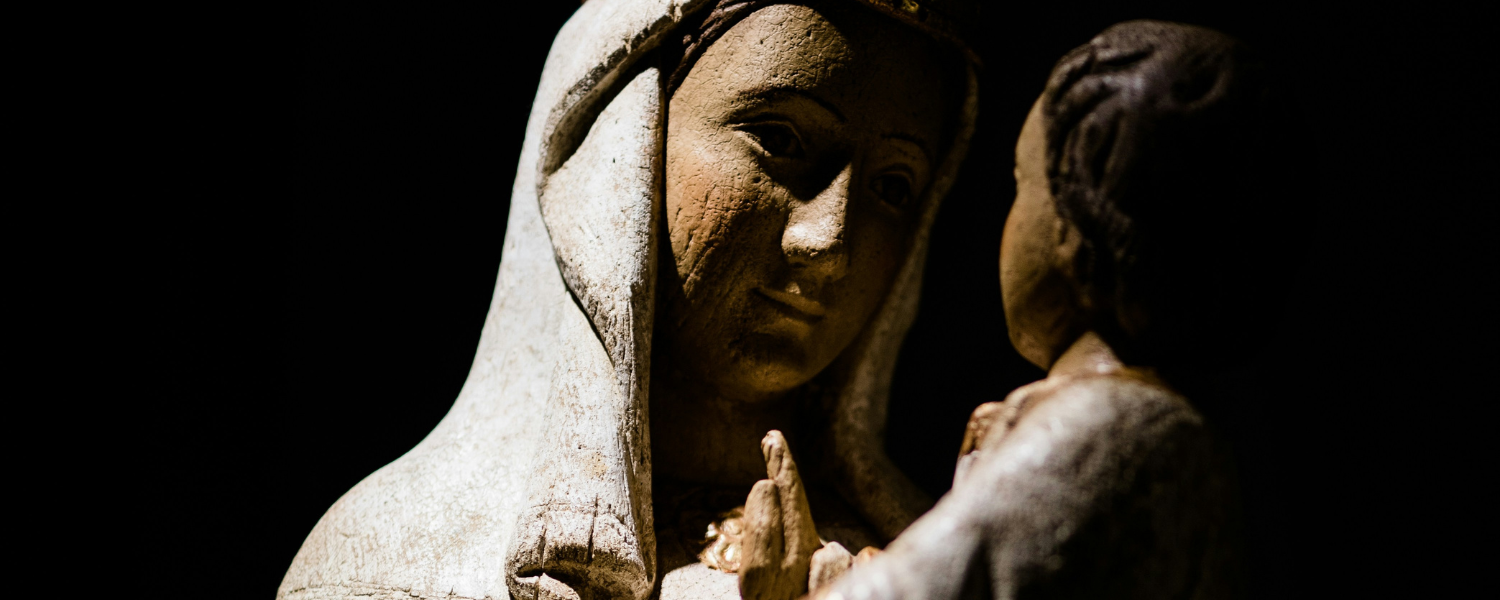
EMBRACE THE UNEXPECTED
The Magnificat delights me.
No matter how many times I’ve read or sung it–my favorite settings are “Holy is Your Name” (Tony Alonso), “Canticle of the Turning” (Rory Cooney), and “Magnificat” (Norah Duncan IV)–there is always something new, surprising, utterly bewildering to discover in its text.
My soul proclaims the greatness of the Lord;
my spirit rejoices in God my savior,
for he has looked upon his lowly servant
From this day all generations will call me blessed.
Grandiose words, and hardly ones you’d expect from the mouth of a young girl.
What follows is even more baffling:
He has cast down the mighty from their thrones
and has lifted up the lowly.
He has filled the hungry with good things,
and the rich he has sent away empty.
The Magnificat is shocking. We understand the Gospels as recountings of Jesus’ life and ministry. Yet these are not his words but his mother’s, a teenage girl who, if she were living today, we might say was plucked from obscurity. And this is not Mary, meek, lowly, and mild, as some Christmas carols depict. She is neither docile nor submissive. The Mary who sings of a just, redeeming God, is fiery. She is brimming with confidence that she is known and loved by God. And she praises the Lord who subverts expectations, striking down that which we exalt and exalting those whom we ignore.
The Canticle of Mary serves as an exhilarating, poignant reminder that–in Ignatian terms–God is in all things. Speaking through voices society considers insignificant. Dwelling in the places we rush past. Converting hearts and, through those hearts, transforming our world.
God of surprises, grant us the grace to see with eyes of curiosity rather than expectation, so that we may better embrace others and ourselves as vessels of Your transforming power.
Gabrielle Poma